


Dell Vostro audio-video review
Tuesday, August 28, 2007
Dell's Vostro so-so review
If you like reading Walt Mossberg's reviews in The Wall Street Journal, here's a video clip of his review of Dell's new Vostro computer line. Intended for small, small businesses, the system gets only a mediocre rating by Walt. Put your money into the home office line of Dell's if that's still your brand.
Dell Vostro audio-video review
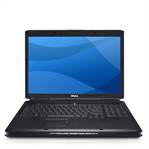
Dell Vostro audio-video review

Is your computer down for the count?
Even with better security suites, combining anti-virus, spyware and firewall, we still see the summer meltdown - about the fifth year in a row that Computer Clarity has been called to fix or diagnose a computer problem due to a slow computer that just won't do anything. My book, Computer Ease, has an entire chapter covering spyware. The Chicago Computer Soceity reviewer said that chapter alone is worth the $14.95 price of the book.
It happens most in families where children of all ages use the Internet, and inadvertently get themselves into trouble. Often it is not worth fixing the computer because of the high labor cost involved, and because if they did it once they will likely do it again, without a proper protection suite.
Consumer Reports recently cites the facts:
Best anti-virus, spyware and firewall suites include:
Computer Associates Internet Security Suite
Panda Software
TrendMicro
Better to spend $50/year on protection than send your computer to the next electronics recycling event... which is Sept. 29th at Motorola in Schaumburg. Do not throw computers, printers, or monitors in the trash.
It happens most in families where children of all ages use the Internet, and inadvertently get themselves into trouble. Often it is not worth fixing the computer because of the high labor cost involved, and because if they did it once they will likely do it again, without a proper protection suite.
Consumer Reports recently cites the facts:
- Lack of protection on the Internet has cost consumers $7 billion over two years.
- Computer viruses have prompted 1.8 million households to junk their PCs over the past two years, while spyware has claimed another 850,000 machines in the past six months.
- And, one-third of U.S. households don't protect their computers from spyware.
Best anti-virus, spyware and firewall suites include:
Computer Associates Internet Security Suite
Panda Software
TrendMicro
Better to spend $50/year on protection than send your computer to the next electronics recycling event... which is Sept. 29th at Motorola in Schaumburg. Do not throw computers, printers, or monitors in the trash.
Thursday, August 23, 2007
Fix your Norton Anti-Virus program today
If you use Norton Anti-Virus, you should run Live Update as soon as you can. The company patched a serious flaw on August 12th.
Through an error in its product, programming language flaws could allow another computer to take control of your software. Norton was not properly checking the data it received to make certain malicious commands did not pass through.
Thanks to Network World for announcing the problem - there's no record of it on Norton's Symantec site.
Through an error in its product, programming language flaws could allow another computer to take control of your software. Norton was not properly checking the data it received to make certain malicious commands did not pass through.
Thanks to Network World for announcing the problem - there's no record of it on Norton's Symantec site.
Friday, August 17, 2007
Is it a phone bill or a novel?
Now that iPhone customers got over the shock of paying $500 or $600 for a phone, their first month phone bills are landing with a big THWAK in the mailbox or on their doorstoop. A 50 or 100 page bill??
Seems the sleek-minded Apple folks and the AT&T Service provider screwed up big time.
Here's an example, from the hilarious David Pogue of the New York Times.
If you have time, read more at David's blog at http://pogue.blogs.nytimes.com/2007/07/18/iphoneatt-billuh-oh/
Of course, the only reason I find this so funny is because I didn't buy one !
Seems the sleek-minded Apple folks and the AT&T Service provider screwed up big time.
Here's an example, from the hilarious David Pogue of the New York Times.
..."It’s a staggeringly, hatefully complex document, designed by some Monty Pythoneseque committee in charge of consumer confusion.
For starters, although I signed up for what iTunes told me was a $60 plan (450 minutes, unlimited Internet), the bill says I have a $40 voice plan and a $20 Internet plan, and lists them on separate pages.
The first bill, believe it or not, comes to $150. It’s filled with unexplained services and features that were never mentioned during the signup process, like MEDIA MAX, EXPD M2M, VOICE PRIVACY, and AT&T DIRECT BILL.
... It’s an unadulterated waste of paper, ink, and fuel to deliver it. It helps no one; dudes, we’re all on unlimited data plans! Who the heck needs a breakdown like this? If AT&T thinks anyone cares, they should stick it on the Web, for crying out loud."If you have time, read more at David's blog at http://pogue.blogs.nytimes.com/2007/07/18/iphoneatt-billuh-oh/
Of course, the only reason I find this so funny is because I didn't buy one !
Wednesday, August 08, 2007
The virtual reality of Web 2.0

I've written before about Web 2.0 - the convergence of social networking that puts the MeMe generation in a homogeneous sandbox with all their playmates. Web 2.0 sites like Digg and FaceBook draw crowds who post their favorite things online - lists of web sites, books, photos, music, and surround themselves with others who share their interest.
Many of these social networking site owners don't do much except pay the electric bill, yet they make a zillion dollars on advertising.
What are we wasting in the earth's resources by dreaming up ways to waste time through these social networking venues? Are you ready for the answer? ....
One site, secondlife.com, allows you to create an "avatar," a fake you, in a land of make-believe where you can create essentially a cartoon version of yourself, your town, clothing, etc. Or a fantasy life for yourself as a billionaire, movie star, who knows what else...
Second Life describes itself as "a 3D online digital world imagined, created & owned by its residents." It lets people live in a fantasy world, acting out behaviors they can't get away with in real life, and buying and selling goods with an imaginary currency called "Linden dollars."
Once the site became popular, large companies even created avatars for their brands and create an entire imaginary society online.
Fascinating in itself, sociologists are surely working on an analysis of "people with too much time." But more interesting at the moment, author Nick Carr, author of Does IT Matter? has calculated that an avatar on Second Life essentially uses as much electricity as a real live resident of Brazil.
The avatar world on Second Life has an average of 12,500 people online at any time. Carr calculates the computers of the real people who create these imaginary lives would use 12,500 computers, and the servers that host the site might require 4,000 computers. Based on typical watts of electricity consumed by computers, a day on Second Life therefore consumes about 60,000 kilowatt-hours.
So check the world electricity usage stats and that's a close measure to the daily electricity used by an average person in Brazil.
Now should we measure the lost productivity in the world economy by people creating and dressing these fake personas?
An executive at Sun MicroSystem's Dave Douglas took this moral dilemma a step further and calculated the CO2 emissions (greenhouse gasses) from the production of all this electricity. Douglas writes the avatar uses "1,752 kWH/year per avatar -- about 1.17 tons of CO2. That's the equivalent of driving an SUV around 2,300 miles (or a Prius around 4,000)."
You can read more at Nick Carr's blog: http://www.roughtype.com/archives/2006/12/avatars_consume.php
or post a comment here to share your thoughts.
Thursday, July 19, 2007
Information grab by Google?
As an update to the post of July 8, about Google:
The Google program that ran on PBS in Chicago on July 12th, a film called "The World According to Google" was surprising.
Instead of celebrating the behemoth, it dug into assessing the scope of the enterprise, questioning the right of one company to collect all the world's information. I've long suspected Google and other big internet firms were on that path.
I listened with interest as Brewster Kahle, the man who made a fortune with the Alexa search engine, and founded the Internet Archive in 1996 discussed the issue. Unlike Google, the Internet Archive purpose is: "offering permanent access for researchers, historians, and scholars to historical collections that exist in digital format."
There's an interesting interview with Brewster Kahle on SecondLife.com.
The business model for Google is sound: give information away for free, get money from advertisers. But who owns that information? We do. And, while it is clear that large internet companies collect user data, they are also giving that information away, either through strategic alliances, or if the government demands it.
Do you want all your private photos, email , address, web search history and files on your computer archived forever by them? And given or sold to others?
The Internet archive has received a grant to challenge Google Library's right to own digital book rights. See CNET http://www.archive.org/iathreads/post-view.php?id=73142.
Are you still with me? Contrary to Google's efforts to capture and digitize books from the world's libraries, the Open Content Alliance, is a joint effort by the Internet Archive, Yahoo and Microsoft to digitize library collections, including those of the University of California system and The University of Toronto. Unlike a similar project from Google, which allows users to read the digitized content only through Google's Web site, the OCA material will be searchable through any service and everyone will be encouraged to download books.
Who's to say Google will always live by its 'do no evil' motto, once they compile more information than any other source?
Who's to say what is free on the web today won't suddenly require prices once needed information is locked up by a corporation?
I'm only asking the questions, here. I don't have the answers, but hope you'll spend a few minutes noodling the ethical dilemma posed by the problem.
The Google program that ran on PBS in Chicago on July 12th, a film called "The World According to Google" was surprising.
Instead of celebrating the behemoth, it dug into assessing the scope of the enterprise, questioning the right of one company to collect all the world's information. I've long suspected Google and other big internet firms were on that path.
I listened with interest as Brewster Kahle, the man who made a fortune with the Alexa search engine, and founded the Internet Archive in 1996 discussed the issue. Unlike Google, the Internet Archive purpose is: "offering permanent access for researchers, historians, and scholars to historical collections that exist in digital format."
There's an interesting interview with Brewster Kahle on SecondLife.com.
The business model for Google is sound: give information away for free, get money from advertisers. But who owns that information? We do. And, while it is clear that large internet companies collect user data, they are also giving that information away, either through strategic alliances, or if the government demands it.
Do you want all your private photos, email , address, web search history and files on your computer archived forever by them? And given or sold to others?
The Internet archive has received a grant to challenge Google Library's right to own digital book rights. See CNET http://www.archive.org/iathreads/post-view.php?id=73142.
Are you still with me? Contrary to Google's efforts to capture and digitize books from the world's libraries, the Open Content Alliance, is a joint effort by the Internet Archive, Yahoo and Microsoft to digitize library collections, including those of the University of California system and The University of Toronto. Unlike a similar project from Google, which allows users to read the digitized content only through Google's Web site, the OCA material will be searchable through any service and everyone will be encouraged to download books.
Who's to say Google will always live by its 'do no evil' motto, once they compile more information than any other source?
Who's to say what is free on the web today won't suddenly require prices once needed information is locked up by a corporation?
I'm only asking the questions, here. I don't have the answers, but hope you'll spend a few minutes noodling the ethical dilemma posed by the problem.
--
Helen Gallagher
Computer Clarity
www.cclarity.com
Tech news at cclarity.blogspot.com
Sunday, July 15, 2007
Have mouse, will travel ~ and travail
I burned my finger with a too-hot touchpad. Here's my solution:
I love using my notebook computer, all day, every day, from cafe, to client, to summer on the balcony.
My Averatec notebook has a speedy built-in touchpad but lately it has become so HOT I'm hurting my fingers. While waiting for tech support to determine if there is a recall notice, I switched to my wireless mouse.
The Logitech Optical Wi-FI mouse connects wirelessly via a USB sensor that plugs into your computer's USB port. The connector looks just like a thumb drive. When you roam, you pull the USB out, snap it onto the bottom of the mouse and you're ready to go. Without a rolling ball on the bottom, the mouse works on any surface, knee, dashboard, even on your laptop wrist rest.
I have been using it lately as a portable mouse wherever I go and it is fantastic. Office Max has a big selection, and I'm sure other retailers do too.
Logitech Mouse
PS - it's a perfect present for all those Leo's with an August birthday!!
Read more Good Mousekeeping tips in "Computer Ease."
I love using my notebook computer, all day, every day, from cafe, to client, to summer on the balcony.
My Averatec notebook has a speedy built-in touchpad but lately it has become so HOT I'm hurting my fingers. While waiting for tech support to determine if there is a recall notice, I switched to my wireless mouse.
The Logitech Optical Wi-FI mouse connects wirelessly via a USB sensor that plugs into your computer's USB port. The connector looks just like a thumb drive. When you roam, you pull the USB out, snap it onto the bottom of the mouse and you're ready to go. Without a rolling ball on the bottom, the mouse works on any surface, knee, dashboard, even on your laptop wrist rest.
I have been using it lately as a portable mouse wherever I go and it is fantastic. Office Max has a big selection, and I'm sure other retailers do too.
Logitech Mouse
PS - it's a perfect present for all those Leo's with an August birthday!!
Read more Good Mousekeeping tips in "Computer Ease."
Sunday, July 08, 2007
On PBS this Thursday, July 12, 2007
Google truly is an amazing empire. Be sure to watch this PBS show Thursday night.
And while Google has grown from good to great, and bred more than a few multi-millionaires, remember, it's not always the best search tool for your needs.
Read about "Search Engines: Order out of chaos," in Computer Ease.
The World According to Google
Thursday, July 12, 8:00pmCHANNEL 11 (WTTW)
A look at Google, the Internet company whose motto is "don't be evil." Included: the company's "chief Internet evangelist" Vint Cerf; Google's hiring process; and the ethical and philosophical questions it faces.
And while Google has grown from good to great, and bred more than a few multi-millionaires, remember, it's not always the best search tool for your needs.
Read about "Search Engines: Order out of chaos," in Computer Ease.
Tuesday, July 03, 2007
Is more RAM the answer?
If your computer is slowing down, it is not likely due to the number of files you've saved. No need to feel guilty and start emptying the trash. It's more likely the amount of random access memory (RAM).
I know what you're thinking: The computer has the same amount of memory it did when it was new. Why wouldn't it be enough now. Well, more programs, like web browsers and Microsoft Office use much more memory. They are now graphic-intensive resource hogs.
The less memory you have, the slower the computer is to switch between programs, open and close files, and save your data. The more time you're online, the slower it works, perhaps needing a reboot to refresh the memory. When memory is unavailable, the computer starts using disk space for temporary, virtual storage.
Memory is an expensive component of computers so PC manufacturers skimp on memory. If you can, next time, buy a computer with double the original memory.
For now, if your computer acts downright lazy, the easy solution is to double the memory.
You can also use a utility like MemTurbo or SpeedUpMyPC.
I know what you're thinking: The computer has the same amount of memory it did when it was new. Why wouldn't it be enough now. Well, more programs, like web browsers and Microsoft Office use much more memory. They are now graphic-intensive resource hogs.
The less memory you have, the slower the computer is to switch between programs, open and close files, and save your data. The more time you're online, the slower it works, perhaps needing a reboot to refresh the memory. When memory is unavailable, the computer starts using disk space for temporary, virtual storage.
Memory is an expensive component of computers so PC manufacturers skimp on memory. If you can, next time, buy a computer with double the original memory.
For now, if your computer acts downright lazy, the easy solution is to double the memory.
You can also use a utility like MemTurbo or SpeedUpMyPC.
Saturday, June 30, 2007
Act completes turn-around
The many fans of Act in Computer Clarity's database will be thrilled to know the newest versions are stellar.
We mourned the loss of speed and clarity after version 2000, when Act was sold to Best Software, who made it second-best with version 2005. Very slow ... I mean v e r y s l o o o w. It was maddening.
Act is now owned by Sage Software and version 2007 is terrific. Performance is up to speed if your computer has at least 1 GB memory, and the appearance is improved. The beta of their next version shows Sage is on the right track, and is rewarding our patience after a rocky change in ownership.
You can still purchase older versions of Act on the secondary market (amazon, buy.com, etc.) but spring for the newest if your business needs a fresh start on managing contacts.
We mourned the loss of speed and clarity after version 2000, when Act was sold to Best Software, who made it second-best with version 2005. Very slow ... I mean v e r y s l o o o w. It was maddening.
Act is now owned by Sage Software and version 2007 is terrific. Performance is up to speed if your computer has at least 1 GB memory, and the appearance is improved. The beta of their next version shows Sage is on the right track, and is rewarding our patience after a rocky change in ownership.
You can still purchase older versions of Act on the secondary market (amazon, buy.com, etc.) but spring for the newest if your business needs a fresh start on managing contacts.
Friday, June 22, 2007
AT&T = Ameritech = SBC = AT&T
Now that "the phone company" has come full circle, most clients who signed up for SBC Global DSL service are being phased into the AT&T DSL service. If you did not receive an email from AT&T instructing you on how to change your POP and SMTP mail servers, and are having trouble with email, here are the correct settings.
Instead of:
pop.sbcglobal.yahoo.com use pop.att.yahoo.com
Instead of:
smtp.sbcglobal.yahoo.com use smtp.pop.yahoo.com
Change the POP server port to 995 instead of 110 and
change the SMTP server port to 465 instead of 25.
Got it? If not, let me know if you need a housecall.
Helen
Instead of:
pop.sbcglobal.yahoo.com use pop.att.yahoo.com
Instead of:
smtp.sbcglobal.yahoo.com use smtp.pop.yahoo.com
Change the POP server port to 995 instead of 110 and
change the SMTP server port to 465 instead of 25.
Got it? If not, let me know if you need a housecall.
Helen
Saturday, June 16, 2007
Most-asked tech questions
Having just returned from a brief vacation, the voicemail and email show a trend. Here's what's on the minds of my clients:
1. Should I buy another Windows XP computer while they are still available?
Answer: Yes. Don't get Vista unless you have lots of spare time to play around with it.
2. What's the easiest backup method.
Answer: USB thumb drives or online backup service like Genie Backup Manager.
3. Email is becoming a terrible, messy burden.
Answer: I know, I know. The best strategy is to reply, file or delete. Don't let the Inbox, Sent or Trash build up to hundreds of messages. It's anxiety-producing and inefficient. Read, Act, or Dump, that's all we can do.
4. Isn't there an easier way to find my files?
Answer: Windows Explorer with it's nested folder system, and quick search ability is the best we've got for now. It does take time to manage, but it takes less time than paper files. Make folders, drag your stuff into them, and do a backup. Then, grab a book and go to the swimming pool to relax.
There is an entire chapter in Computer Ease on handling these mundane tasks. But if they make our life easier and let us work faster, they're worth learning.
1. Should I buy another Windows XP computer while they are still available?
Answer: Yes. Don't get Vista unless you have lots of spare time to play around with it.
2. What's the easiest backup method.
Answer: USB thumb drives or online backup service like Genie Backup Manager.
3. Email is becoming a terrible, messy burden.
Answer: I know, I know. The best strategy is to reply, file or delete. Don't let the Inbox, Sent or Trash build up to hundreds of messages. It's anxiety-producing and inefficient. Read, Act, or Dump, that's all we can do.
4. Isn't there an easier way to find my files?
Answer: Windows Explorer with it's nested folder system, and quick search ability is the best we've got for now. It does take time to manage, but it takes less time than paper files. Make folders, drag your stuff into them, and do a backup. Then, grab a book and go to the swimming pool to relax.
There is an entire chapter in Computer Ease on handling these mundane tasks. But if they make our life easier and let us work faster, they're worth learning.
Monday, June 11, 2007
Jim Coates retires from tech writing
Chicago Tribune columnist, Jim Coates, a nationwide favorite, is retiring today. He provided more laughs, compassion and clarity than any other tech columnist in the country. No one could sort out the facts, labor hours over re-creating errors, testing software, interviewing company execs, and sniffing out the truth about the way things work.
Here at Computer Clarity I always thought the battles I fought to make things right for clients were in unison with Jim and his thinking about the way technology should work, so I'll miss his columns. His retirement may be the start of a book career, so we haven't heard the last of him.
Here at Computer Clarity I always thought the battles I fought to make things right for clients were in unison with Jim and his thinking about the way technology should work, so I'll miss his columns. His retirement may be the start of a book career, so we haven't heard the last of him.
Saturday, May 26, 2007
Life - stored in computers

Computers are fantastic for data storage, but there's so much more than can do. I've long followed the work of Gordon Bell, a 72-year-old Microsoft engineer who is gathering all the elements of his life into a digital storage system. His project, My Life Bits, is sponsored by Microsoft. Bell's biggest challenge is to come up with a meaningful use for such a powerful collection of life's flotsam.
You can read a fresh account of this project by Alec Wilkinson in the 5/28/07 New Yorker. More to the point, it might get you thinking about what you'd like to log as the memorable events of your own life. From the compulsive diaries of Samuel Pepys, the attention and introspection of such records is surely a noble effort, but I fear, one that I'd be incapable of stopping once started.
Another Microsoft researcher, Eric Horvitz, has intriguing ideas about creating a computer that could think like us. His Lifebrowser project uses a computer to do so much more than we've ever thought of. When computers are still, he feels they could be put to use to understand our minds, catalog and organize our memories, and " help you be a better you."
My personal commitment is on a much smaller scale. Using a Palm LifeDrive I'm able to capture more than 4 GB of data - all contacts, calendars, photos, books, business files in Word, Excel, PowerPoint, accounting, wi-fi, email, web pages and more more more. I'm listening to MP3 recordings of a conference I attended last month, simultaneously taking notes and researching web sites of the speakers.
It's a fantastic adventure to stretch technology and my mind til they converge in a smarter place. We live in a marvelous age.
Thursday, May 24, 2007
"Release Your Writing"
Good news for writers interested in publishing a book. I am completing my manuscript for Release Your Writing: Options in Self-Publishing and will have the book available for the Cultural Center Book Fair in October. Learn more at ReleaseYourWriting.com
Another nice award

After winning a non-fiction award for Computer Ease in 2006 at the Illinois Women's Press Association, I'm doubly pleased to have won 3rd place for Best Essay this year. It is for my contribution to The World Is a Kitchen, published by Lonely Planet's Travelers' Tales.
http://worldisakitchen.typepad.com/the_world_is_a_kitchen/2007/05/twiak_contribut.html
Friday, May 18, 2007
What is Web 2.0?
A client just asked for help understanding Web 2.0 on the Q & A forum at www.cclarity.com/questions.html.
Since space is limited there, here's the concept:
Web 2.0 is a new wave beyond static web pages delivering info on your screen. The 2.0 implies a new generation, just as software that moves from version 1 to 2.
What's different is that information can be readily shared, accessed from anywhere, and massive storage space is free. It includes simple, and even free, tools and applications, like Picasa for photo management. The broader concept is: "web-based software services" that encourage users to become more involved with information.
Web 2.0 start-ups received $844 million in venture capital during 2006, double the prior year, according to VentureOne.
Web 2.0 is moving into "mashups," merging ideas such as adding Google Maps to Craig's List. If someone searches for an apartment on Nob Hill, they can click the map to view the actual neighborhood and street.
Web 2.0 uses new technology that goes far beyond HTML, like AJAX, RSS and XML.
It remains to be seen if this is a new way for the me-me-me generation to waste time, or whether companies can make it work for communication and interactive meetings, giving people a base station to launch their life online.
TIP: When you see a word you're unfamiliar with, look it up at dictionary.com.
When you're mystified by acronyms, use acronymfinder.com.
Since space is limited there, here's the concept:
Web 2.0 is a new wave beyond static web pages delivering info on your screen. The 2.0 implies a new generation, just as software that moves from version 1 to 2.
What's different is that information can be readily shared, accessed from anywhere, and massive storage space is free. It includes simple, and even free, tools and applications, like Picasa for photo management. The broader concept is: "web-based software services" that encourage users to become more involved with information.
Web 2.0 start-ups received $844 million in venture capital during 2006, double the prior year, according to VentureOne.
Web 2.0 is moving into "mashups," merging ideas such as adding Google Maps to Craig's List. If someone searches for an apartment on Nob Hill, they can click the map to view the actual neighborhood and street.
Web 2.0 uses new technology that goes far beyond HTML, like AJAX, RSS and XML.
It remains to be seen if this is a new way for the me-me-me generation to waste time, or whether companies can make it work for communication and interactive meetings, giving people a base station to launch their life online.
TIP: When you see a word you're unfamiliar with, look it up at dictionary.com.
When you're mystified by acronyms, use acronymfinder.com.
Could Google become the "New Coke?"
Google got to the top of the ephemeral search heap by focusing on gathering more information than anyone else, using search algorithms to produce query results and creating a design that gave users more white space than jut about any other web site. Not revolutionary, but effective and efficient.
Now, Google is beginning to stray. Like New Coke, they're tampering with a core product and losing the fizz. Or McDonald's, with a winning formula for burgers, now saying: "You want salad? We've got salad." "Steak, chicken, ice cream? Come on in." So it loses its uniqueness, differentiation and becomes a confusing choice, whether we're talking media or meat.
I'm sure you've noticed the web, or now Web 2.0 (see next article), is merging media, like TV, radio, newspapers, with video, music, and info-bits from random sources. Google is now testing its famous search function doctored up to add all that plus timelines, photo galleries,
Saying the old model of searching is, well, old, Google is launching the first major change ever for the multi-billion dollar search company. The new "Universal Search" model looks like the mega-storm of junk you can find elsewhere: Images, video clips, news from elsewhere, book content, maps and, of course, web sites, which is what people are looking for when they search Google.
So deep is the promised change, users will have to learn to navigate a new Google homepage and wander past ads for other Google products. Or maybe not - Maybe Google will no longer be a web user's first stop when they're hungry for information and short on time. Hmmm, isn't that the same problem McDonald's has?
If used well for serious research, Google is like magic. But, they're "fiddling with the magic," says ZDNet's digital blogger, Donna Bogatin.
While waiting for New Google, remember Clusty.com offers clustered results down the left rail of the screen, sub-dividing search results into categories. No need to waste time elsewhere, sorting through the fast-food menu that used to be Google.
Now, Google is beginning to stray. Like New Coke, they're tampering with a core product and losing the fizz. Or McDonald's, with a winning formula for burgers, now saying: "You want salad? We've got salad." "Steak, chicken, ice cream? Come on in." So it loses its uniqueness, differentiation and becomes a confusing choice, whether we're talking media or meat.
I'm sure you've noticed the web, or now Web 2.0 (see next article), is merging media, like TV, radio, newspapers, with video, music, and info-bits from random sources. Google is now testing its famous search function doctored up to add all that plus timelines, photo galleries,
Saying the old model of searching is, well, old, Google is launching the first major change ever for the multi-billion dollar search company. The new "Universal Search" model looks like the mega-storm of junk you can find elsewhere: Images, video clips, news from elsewhere, book content, maps and, of course, web sites, which is what people are looking for when they search Google.
So deep is the promised change, users will have to learn to navigate a new Google homepage and wander past ads for other Google products. Or maybe not - Maybe Google will no longer be a web user's first stop when they're hungry for information and short on time. Hmmm, isn't that the same problem McDonald's has?
If used well for serious research, Google is like magic. But, they're "fiddling with the magic," says ZDNet's digital blogger, Donna Bogatin.
While waiting for New Google, remember Clusty.com offers clustered results down the left rail of the screen, sub-dividing search results into categories. No need to waste time elsewhere, sorting through the fast-food menu that used to be Google.
Tuesday, May 01, 2007
Business 2.0 mag flunks Backup 101
Business 2.0 is a glossy business & technology magazine owned by Time, Inc. While putting together their next issue, for June, the magazine’s editorial system crashed, wiping out all the work and the backup server failed to back up.
In the New York Times, Business 2.0 editor Josh Quittner is quoted as saying: "The night of the crash, our tech guy was here until 4 o’clock in the morning, but the patient died.” Until then, the magazine had never had to rely on its backup server, he said, so no one had noticed that its programming was either obsolete or dysfunctional, or both.
The June issue will still be published. What saved the day? They had emailed all article content to their attoryneys, and had the email attachments, because the mail server didn't crash. Maybe next time they'll also back up their email.
In the New York Times, Business 2.0 editor Josh Quittner is quoted as saying: "The night of the crash, our tech guy was here until 4 o’clock in the morning, but the patient died.” Until then, the magazine had never had to rely on its backup server, he said, so no one had noticed that its programming was either obsolete or dysfunctional, or both.
The June issue will still be published. What saved the day? They had emailed all article content to their attoryneys, and had the email attachments, because the mail server didn't crash. Maybe next time they'll also back up their email.
Monday, April 23, 2007
My New York marathon
I'm not a runner, and definitely not athletic, so my version of a New York marathon is this:
"Thirty hours in New York without crossing a street"
As those who know me can attest, I'm always thinking about the perils of multi-tasking and how to be efficient, focus and get things done.
The American Society of Journalists and Authors (asja.org) had their annual writing conference this past weekend and I wanted to attend scads of sessions and workshops. Limited time didn't stop me. Although I have pressing deadlines and commitments, I though about how I could make it work - take the time to escape to New York and focus on writing.
So I took American Airlines first flight Saturday morning, and took a taxi from LaGuardia upon landing. Twenty minutes later, I was immediately immersed in the conference at the Grand Hyatt. I attended lectures, targeted my goals to match the time available, and did some networking. Walked 50 feet from the hotel into Grand Central Station to give credence to the metaphor of life being "like Grand Central Station." Sure, it's a busy place, but the architecture, eclectic mix of people, and the exotic food court won me over.
Sunday as the conference wrapped up, it was back to the airport and home. It was 30 hours round trip, mission accomplished, a weekend getaway, a productive conference, and an opportunity to focus.
The very successful "Getting Things Done" by David Allen has lots of good advice on productivity and focus, if you have time to read it... while you're jogging. Allen actually admits its okay to have nothing on your mind now and then.
Helen Gallagher
author: Computer Ease
"Thirty hours in New York without crossing a street"
As those who know me can attest, I'm always thinking about the perils of multi-tasking and how to be efficient, focus and get things done.
The American Society of Journalists and Authors (asja.org) had their annual writing conference this past weekend and I wanted to attend scads of sessions and workshops. Limited time didn't stop me. Although I have pressing deadlines and commitments, I though about how I could make it work - take the time to escape to New York and focus on writing.
So I took American Airlines first flight Saturday morning, and took a taxi from LaGuardia upon landing. Twenty minutes later, I was immediately immersed in the conference at the Grand Hyatt. I attended lectures, targeted my goals to match the time available, and did some networking. Walked 50 feet from the hotel into Grand Central Station to give credence to the metaphor of life being "like Grand Central Station." Sure, it's a busy place, but the architecture, eclectic mix of people, and the exotic food court won me over.
Sunday as the conference wrapped up, it was back to the airport and home. It was 30 hours round trip, mission accomplished, a weekend getaway, a productive conference, and an opportunity to focus.
The very successful "Getting Things Done" by David Allen has lots of good advice on productivity and focus, if you have time to read it... while you're jogging. Allen actually admits its okay to have nothing on your mind now and then.
Helen Gallagher
author: Computer Ease
Subscribe to:
Posts (Atom)